
Date: March 3, 2026
Location: Lebanon / Tehran
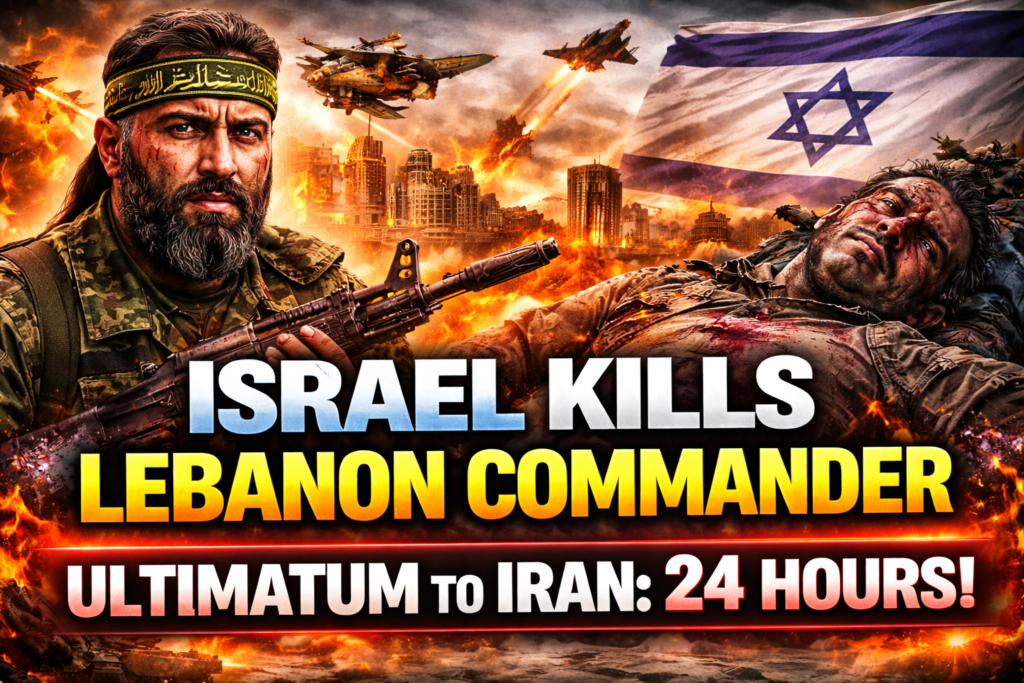
In a major escalation that has sent shockwaves across the Middle East, Israel has assassinated the acting commander of the “Lebanon Force,” part of Iran’s Quds Force, while simultaneously issuing a 24-hour ultimatum to Iranian representatives in Lebanon. The targeted killing underscores the growing tension between Israel, Iran, and their proxies in Lebanon, as regional dynamics shift dramatically.
The Assassination of Dawood Ali Zadeh
According to Israeli military sources, the Israeli Air Force carried out a precision strike in Tehran earlier today, killing Dawood Ali Zadeh, who had assumed leadership of Lebanon Force following the previous commander, Hassan Mahdavi, who was killed in an earlier Israeli operation. Ali Zadeh was considered the highest-ranking Iranian commander overseeing Iran’s operations in Lebanon, acting as a critical liaison between the Iranian government and Hezbollah.
Military spokesperson Avichai Adraee emphasized Ali Zadeh’s central role in coordinating the military capabilities of Hezbollah, particularly in enhancing the group’s strategic weapons programs. His prior positions included leading the Strategic Combat Means Unit within the Quds Force, positioning him as a key knowledge holder on Iran’s regional operations.
Ali Zadeh’s activities in recent months reportedly included guiding Hezbollah’s response strategies following the Israeli military’s “Northern Arrows” campaign and overseeing operational rebuilding efforts to strengthen Hezbollah’s tactical and logistical capacities. His leadership has been central to orchestrating activities against Israeli targets and coordinating proxy operations in Lebanon.
24-Hour Ultimatum to Iranian Representatives
In conjunction with the assassination, the Israeli military has issued a direct warning to Iranian representatives in Lebanon, mandating their departure from the country within 24 hours. Israeli officials have declared that any failure to comply will result in targeted strikes against these representatives wherever they may be located. Adraee stated:
“There will be no safe haven for Iranian representatives in Lebanon after the deadline expires. The Israeli Defense Forces will act decisively to neutralize any threats posed by these operatives.”
This ultimatum signals a new level of direct confrontation between Israel and Iran’s influence in Lebanon, highlighting Israel’s intent to dismantle Iranian command and operational structures in the region.
Further Military Strikes in Southern Lebanon
The Israeli military also announced targeted strikes on buildings in the coastal city of Tyre, southern Lebanon, which are believed to host Hezbollah infrastructure. Residents were warned to evacuate buildings within a 300-meter radius ahead of the planned bombardments. These strikes aim to cripple Hezbollah’s military capabilities and send a strong deterrent message.
Additionally, Israel confirmed the targeted assassination of Reza Khazaei, identified as the right-hand man to the Lebanon Force commander, during operations on the southern suburbs of Beirut. Khazaei was considered a key figure in developing Hezbollah’s military strength and logistical planning.
Hezbollah’s Response and Regional Fallout
The military escalation has provoked significant reactions from Hezbollah, which has continued launching missiles toward northern Israel in retaliation. A senior Hezbollah official vowed an open-ended war should Israel persist in its operations. Lebanese authorities have attempted to restrict Hezbollah’s military and security activities; however, rocket and drone attacks have persisted, particularly from southern Lebanon.
As a result, nearly 30,000 residents have fled southern Lebanese villages, according to UN estimates. The humanitarian impact of these operations continues to grow, highlighting the ongoing civilian risk amid escalating military actions.
U.S. and International Context
The assassination and Israeli military operations occur against a backdrop of broader U.S. involvement. Recent intelligence reports confirm ongoing U.S.-led strikes targeting Iranian military and naval installations, including missile sites and command centers. These operations reflect a coordinated effort between Israel and the United States to disrupt Iran’s regional network and curtail its influence over proxy groups like Hezbollah.
Iran, through the Revolutionary Guard, has vowed retaliation, threatening economic and military targets throughout the region should key Iranian installations be further attacked. The heightened rhetoric signals the potential for a prolonged escalation affecting not only Lebanon and Israel but the wider Middle East.
Strategic Implications
The assassination of Dawood Ali Zadeh and the simultaneous ultimatum to Iranian representatives mark a critical point in the Israeli-Iranian confrontation. Analysts suggest:
- Iranian retaliation is imminent, likely through proxy attacks and missile strikes in Israel or U.S.-affiliated bases.
- Lebanon faces escalating instability, with civilian displacement and urban conflict likely to intensify.
- Israel asserts a direct strike policy, signaling a zero-tolerance approach toward Iranian military influence in neighboring territories.
- U.S.-Israeli coordination indicates a potential multi-front campaign against Iranian operational networks.
This escalation represents a serious risk of regional conflict expansion. The combination of targeted killings, air strikes, and diplomatic ultimatums suggests that Israel is committed to a proactive strategy, while Iran may respond aggressively to protect its regional proxies.
Conclusion
The assassination of the Lebanon Force commander and the issuance of a 24-hour ultimatum to Iranian representatives demonstrates the severity of the current crisis. With both Israel and Iran signaling readiness for further confrontation, the Middle East faces a period of heightened instability. Analysts emphasize the potential for significant geopolitical, economic, and humanitarian repercussions, with neighboring countries needing to prepare for an escalating regional conflict.
As events unfold, the global community is closely monitoring the situation, and any misstep could trigger a wider confrontation involving multiple state and non-state actors.