
An in-depth geopolitical analysis of the Iranian missile strike in central Tel Aviv, examining regional tensions, Israel’s response, and potential Middle East escalation.
Introduction
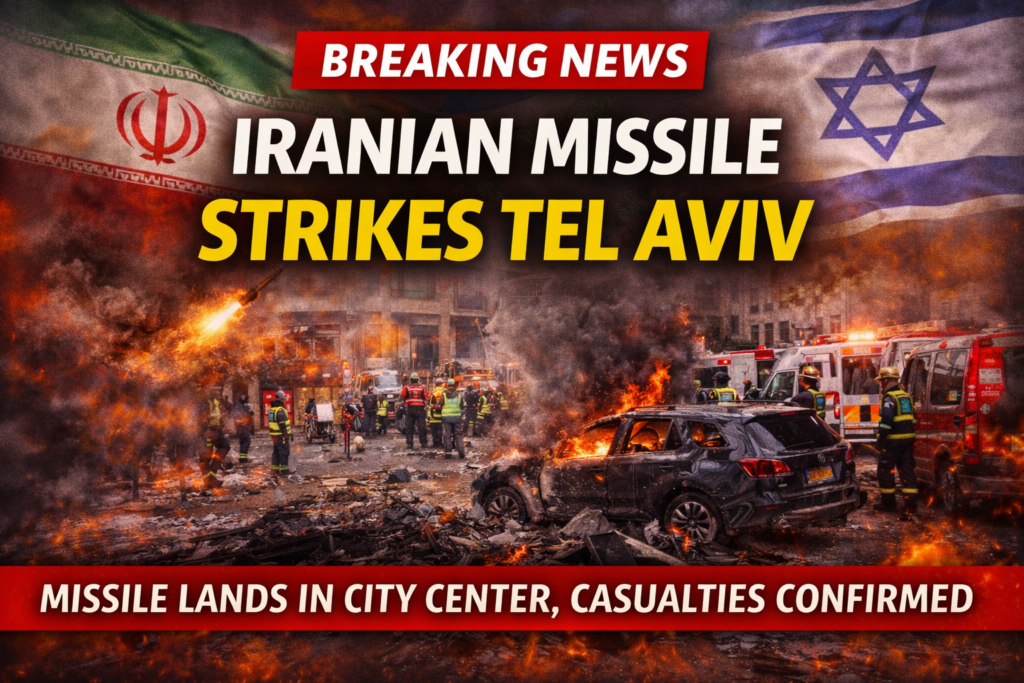
A missile launched by has reportedly struck the heart of , sending shockwaves through the city and raising urgent questions about the stability of the Middle East.
The incident represents a significant escalation in the ongoing Iran-Israel conflict and could trigger broader regional consequences.
In this article, you will learn:
- The immediate impact of the missile strike in Tel Aviv
- Israel’s military and civilian response
- Historical context behind Iran-Israel confrontations
- Potential geopolitical ramifications for the Middle East
- Scenarios for escalation or containment
The Missile Strike: What We Know So Far
Initial reports indicate:
- The missile was partially intercepted by the Iron Dome defense system, but fragments landed in residential and commercial areas.
- Emergency services have been deployed to assess casualties, provide medical aid, and secure the affected zones.
- Authorities are urging citizens to remain in shelters and follow safety protocols.
This marks a rare direct strike on central Israeli urban areas, highlighting a shift from targeted military operations to potential urban exposure.
Israel’s Immediate Response
Israel’s government has initiated:
- An urgent security council meeting led by military and intelligence officials
- Heightened air defense readiness across the country
- Public advisories urging residents to stay indoors and follow civil defense instructions
Officials are balancing the need for immediate civilian protection with strategic military planning, signaling that a measured but firm response may be forthcoming.
Historical Context: Iran-Israel Confrontations
The Iranian-Israeli conflict has been characterized by:
- Proxy warfare in Lebanon, Syria, and Gaza
- Targeted missile strikes and air operations
- Cyber and intelligence operations against critical infrastructure
Recent escalation represents a direct confrontation on Israeli soil, a step beyond the usual proxy engagements. Analysts argue this could reshape Israel’s threat assessment and force a reassessment of both defensive and retaliatory strategies.
Geopolitical Implications for the Middle East
The missile strike may impact the region in several ways:
- Escalation Risk: Could trigger retaliation from Israel and draw in regional allies.
- US and Global Involvement: Washington monitors the situation closely; escalation could involve the United States either diplomatically or militarily.
- Energy Market Volatility: Increased tension in the Middle East tends to spike oil and gas prices.
- Regional Stability: Countries like Egypt, Saudi Arabia, and Jordan may face political and security pressures to respond.
This incident adds a new layer of complexity to the already fragile Middle East security landscape.
Potential Scenarios Moving Forward
Scenario 1: Limited Retaliation and Containment
- Israel may target specific Iranian military assets
- Diplomatic channels are engaged to prevent full escalation
Scenario 2: Broader Regional Confrontation
- Iran may escalate through proxies or additional missile strikes
- Regional military coalitions could be activated
- Heightened risk of civilian casualties and infrastructure damage
Scenario 3: International Mediation and De-escalation
- U.S., EU, or UN intervention may broker temporary ceasefire
- Emphasis on strategic signaling rather than direct confrontation
Human Dimension: Civilian Impact
While governments assess strategy, civilians face immediate consequences:
- Injuries, fatalities, and psychological trauma
- Disruption to daily life, business, and transportation
- Increased anxiety across neighboring countries
Preparedness and rapid emergency response remain key to minimizing civilian harm.
Strategic Takeaways
- Direct Iranian missile strikes in Tel Aviv represent a significant escalation in Iran-Israel tensions.
- Israel’s response is likely to be measured, balancing retaliation with strategic risk management.
- The broader Middle East faces increased uncertainty, with potential involvement of U.S., regional powers, and proxies.
- Accurate information and public communication are critical to prevent panic and misperceptions.
Conclusion
The missile strike in central Tel Aviv is a wake-up call for the region. Beyond immediate military and civilian impacts, it signals heightened geopolitical tension that could reshape alliances, escalate conflicts, and influence global markets.
Maintaining strategic clarity, civilian protection, and measured diplomacy will determine whether the situation escalates or stabilizes. The world watches closely as the Middle East navigates this delicate and dangerous moment.
Call to Action
How do you assess the potential regional fallout of this strike? Share your perspective in the comments below.
If this analysis helps you understand the broader implications, share it with others tracking Middle East developments.